10 ways to make your life a little bit better in 2026
Our experts suggest small things you can do to make positive changes in the coming year.
From shifting your evening meal time to changing your phone settings, we've gathered together advice from some of our brilliant authors – including psychologists, sports scientists and a three-time Academy Award nominee – to help you make the most of your 2026.
1. Turn your phone to grayscale
The bright colours, images, and visual design of social media apps and your phone's screen are engineered to keep your attention and engagement. If you’re trying to loosen your smartphone’s grip on your time, turn your display to greyscale, suggests Dr Kaitlyn Regehr, author of Smartphone Nation. ‘This is one of the quickest and easiest ways of understanding the impact of colour and images on our user experience,’ she explains. Even if you fold and turn the technicolour back on, you should at least have gained a better understanding of how colour and image quality play into the addictive nature of our devices.
Further reading: Smartphone Nation by Dr Kaitlyn Regehr
2. Avoid eating for two hours before you go to bed
‘Our bodies have internal clocks that govern different biological functions,’ says Dr Victoria Maizes, quoting research by Dr. Satchin Panda from the Salk Institute. At night, our bodies should be in ‘repair mode’, but if you’ve just eaten, you’ve kicked off ‘digest mode’, so your body is metabolising nutrients, not getting ready to sleep. On top of this, she says, ‘eating late can also lead to indigestion and heartburn, making it harder to fall and stay asleep.’ Making sure to leave a gap between eating and trying to sleep should help improve the latter.
Further reading: Heal Faster by Dr Victoria Maizes
3. Stop bothering with non-stick pans
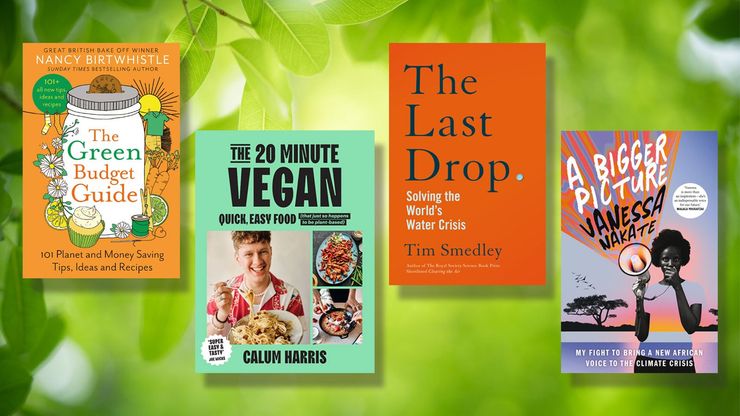
‘Non-stick pans can easily chip and scratch, which means they are not especially durable and long-lasting’ Bake Off winner, eco champion and author Nancy Birthwhistle explains. ‘Finding a pre-loved piece of stainless-steel cookware is great and there are many bargains out there.’ Even those covered in burnt-on food patches are easier to salvage than you might think, and, even better, there is actually a way to make your pans non-stick without the non-stick coating. Nancy explains:
‘Place the dry pan over a high heat. After a few minutes add a drop of water – if it fizzes and evaporates the pan isn’t hot enough. Leave the pan to heat for a further few minutes, then add another drop of water – this time it should glide around the surface of the pan looking like tiny glass pebbles or a single mercury ball (this is called the Leidenfrost effect). The pan is ready and will now essentially act like a non-stick pan.’ Make sure to allow the water to burn off, and turn down the heat and leave for a minute or so, before adding any fats.
Further reading: Clean Magic by Nancy Birtwhistle
Don't Miss
Pure Magic: Nancy Birtwhistle shares her eco-friendly cleaning and gardening tips
Read more4. Keep your coffee if you want to drop the drink
If you want to stop drinking, advises Dr Charles Knowles, author of Why We Drink Too Much, don’t attempt to give up anything else at the same time. ‘Smoking and excessive caffeine consumption are classic examples. In dependent drinkers, these are the very least of our worries,’ he says. This advice extends to the calories you’re no longer getting from drink: ‘it’s wise to replace fluids and calories in the early stages of abstinence, so we’re not missing calories as well as alcohol.’
Further reading: Why We Drink Too Much by Dr Charles Knowles
Alcohol Change UK work for a society that is free from the harm caused by alcohol. You can find out more on the Alcohol Change website.
5. Commit to helping another person (and let them help you)
‘Life is hard enough as it is,’ says actor and musician Cynthia Erivo in her memoir Simply More, ‘and even harder when we make up our minds we’re going to do it by ourselves.’ Instead, she suggests, find someone you can make a pact with – whether in work, or your personal life – to care for, be kind to and to support. Advocate for each others’ needs, listen, and have open conversations. Such a pact, she says, was key to building her and Ariana Grande’s friendship, and to Wicked’s incredible success. ‘We committed to protecting and caring for each other [. . .] To build on each other’s strengths, to encourage the other. The fact that we were consistently there for the other, over time, built deep trust. And that trust and togetherness created a level of honesty and intimacy that allowed us to actually make a film as special as this one,’ Erivo explains.
Further reading: Simply More by Cynthia Erivo
6. Channel your inner toddler
It’s one of the first words we learn, but as we get older, ‘no’ can get harder and harder to say. ‘It becomes tangled with fears of disappointing others, of conflict and general anxiety,’ explains Dr Kirren Schnack, Clinical Psychologist and author of Tools For Life: Ten Essential Therapy Skills Everyone Should Know. ‘Sometimes, we need to return to the comfort we had in those early years, when saying no came naturally, without second-guessing ourselves.’ Practise saying no outloud, in front of the mirror, or just while you’re doing other things, like making dinner. ‘It might feel awkward or even a bit cringe at first,’ admits Dr Kirren, ‘But there’s something powerful about hearing your own voice say the things you’re usually scared to say.’ You don’t always have to give a reason when you’re saying no, but if you do, make it a simple, clear explanation. And only say sorry if you mean it; don’t use it to soften the blow or patch over any guilt. You don’t need to apologise for setting your limits.
Further reading: Tools for Life by Dr Kirren Schnack
7. Play an imaginary toe piano
If you’re a runner looking to prevent injury, work on your toes. ‘Strengthening, specifically foot strengthening exercises, are the foundation of building full body strength,’ says sports scientist Emma Kirk-Odunubi. The main muscle you need to work on to strengthen your foot and aid in its movement control is the tibias posterior, which begins underneath the big toe. To help aid your foot strength, try a toe piano exercise a couple of times a week. ‘Lift and lower each toe individually, like playing piano keys, to improve toe mobility, coordination, and neuromuscular control,’ says Emma.
Further reading: Find Your Pace by Emma Kirk-Odunubi
8. Feeling indecisive? Have a snack
If you’re about to make a decision on something, it’s a good idea to address your basic needs first in order to create a more balanced and clear-minded state from which to make the choice. Katherine Templar Lewis, a cognitive scientist and neuroscience consultant, and bestselling author Sam Conniff, suggest using the HALT method: ‘It stands for Hungry, Angry, Lonely, Tired. It’s a quick and effective way to check in with yourself and address the things that can affect your decision-making and emotional state.’
Further reading: The Uncertainty Toolkit by Sam Conniff and Katherine Templar Lewis
9. Store your cooking oil in glass bottles
‘Oils are sensitive to sunlight and heat, so keep your bottles in a dark place and away from your oven and warm hob,’ advises Dominique Ludwig aka @dominiqueludwig_nutrition. Glass bottles, ideally dark glass if possible, also protect the oils from oxidation or damage. ‘Additionally, glass does not react with the oil, making it a safer option than plastic,’ adds Dominique.
Further reading: No-Nonsense Nutrition by Dominique Ludwig